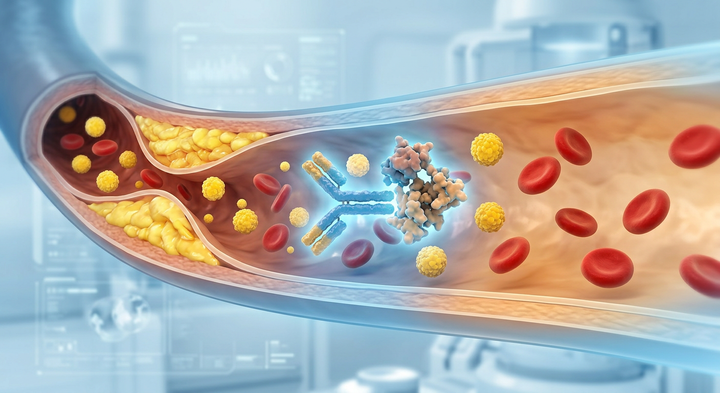
A pre-specified VESALIUS-CV analysis found evolocumab cut all-cause death by 20% in high-risk primary prevention, with the benefit appearing only after 1.5 years and a 1.8-point absolute gap at five years.
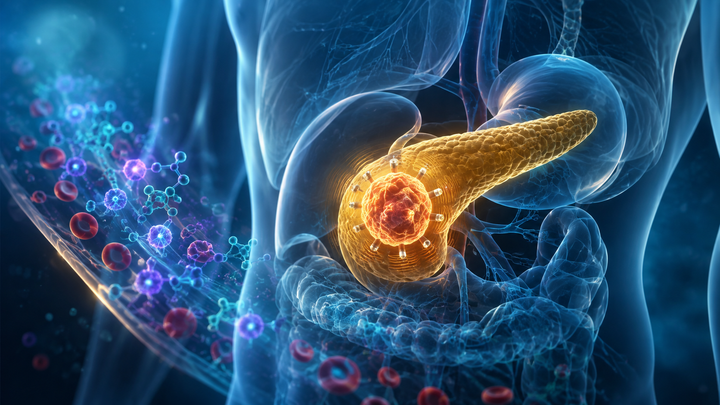
After encouraging early pancreatic data, demand for Alpha DaRT helped quadruple its IMPACT study from 12 patients to 48 as the company moves toward a pivotal trial.
The FDA's landmark approval of Revolution Medicines' daraxonrasib (Rasonque) introduces the first multi-selective RAS(ON) tri-complex inhibitor for metastatic pancreatic adenocarcinoma, doubling overall survival over standard chemotherapy.
MariTide delivered up to about 20% mean weight loss at 52 weeks without a plateau, then Amgen lost about $7 billion in market value. The remaining fight is GIP direction, first-dose gut burden, and conjugate manufacturing cost.
Suzetrigine beat placebo on SPID48 in both pivotal acute-pain trials, then failed the superiority test against hydrocodone/acetaminophen, including a statistically significant loss in bunionectomy.
The $2.3 billion licensing deal for Phase 1 asset HM17321 targets a core drawback of current GLP-1 therapies: the loss of lean skeletal muscle alongside fat.
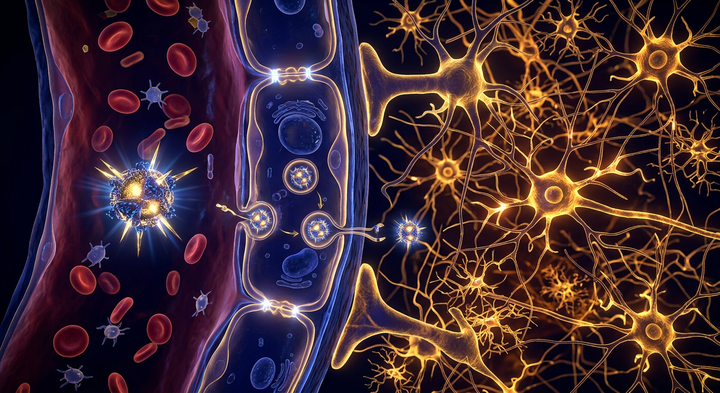
Conjugating antisense oligonucleotides to transferrin receptor transport vehicles achieves fifty-fold deeper brain penetration, challenging the standard of invasive spinal punctures.
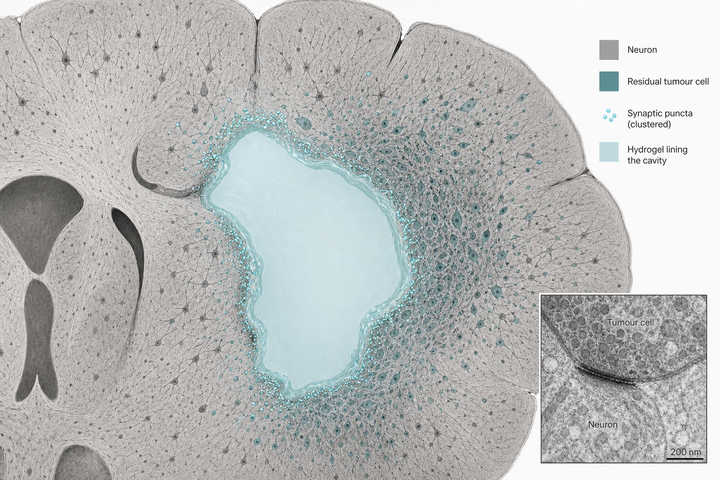
A 25 August Nature Biomedical Engineering paper shows malignant synapses concentrated at the GBM-brain interface, then tests an intracavitary TrkB-silencing hydrogel that more than doubled median survival in a mouse resection model.
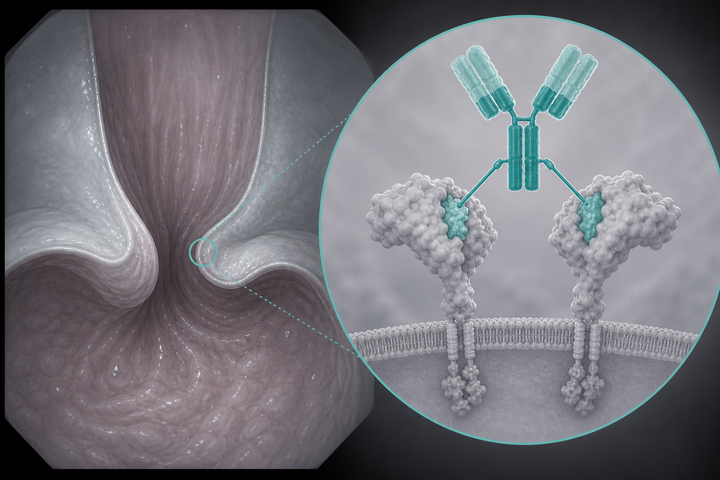
FDA cleared two zanidatamab regimens on 25 August, including a bispecific-plus-PD-1 combination for all HER2+ advanced GEA regardless of PD-L1 status, on Phase 3 data already in NEJM.
The EU's centralized health technology assessment harmonizes clinical efficacy reviews across 27 member states, forcing drug developers to confront disparate national standards in Phase 3 trial design.
The first new pharmacological class for schizophrenia in over seventy years relies on muscarinic receptor agonism, trading dopamine motor side effects for gastrointestinal titration challenges.