
Brain Shuttle Platforms Tackle the Blood-Brain Barrier for Genetic Medicines
Conjugating antisense oligonucleotides to transferrin receptor transport vehicles achieves fifty-fold deeper brain penetration, challenging the standard of invasive spinal punctures.
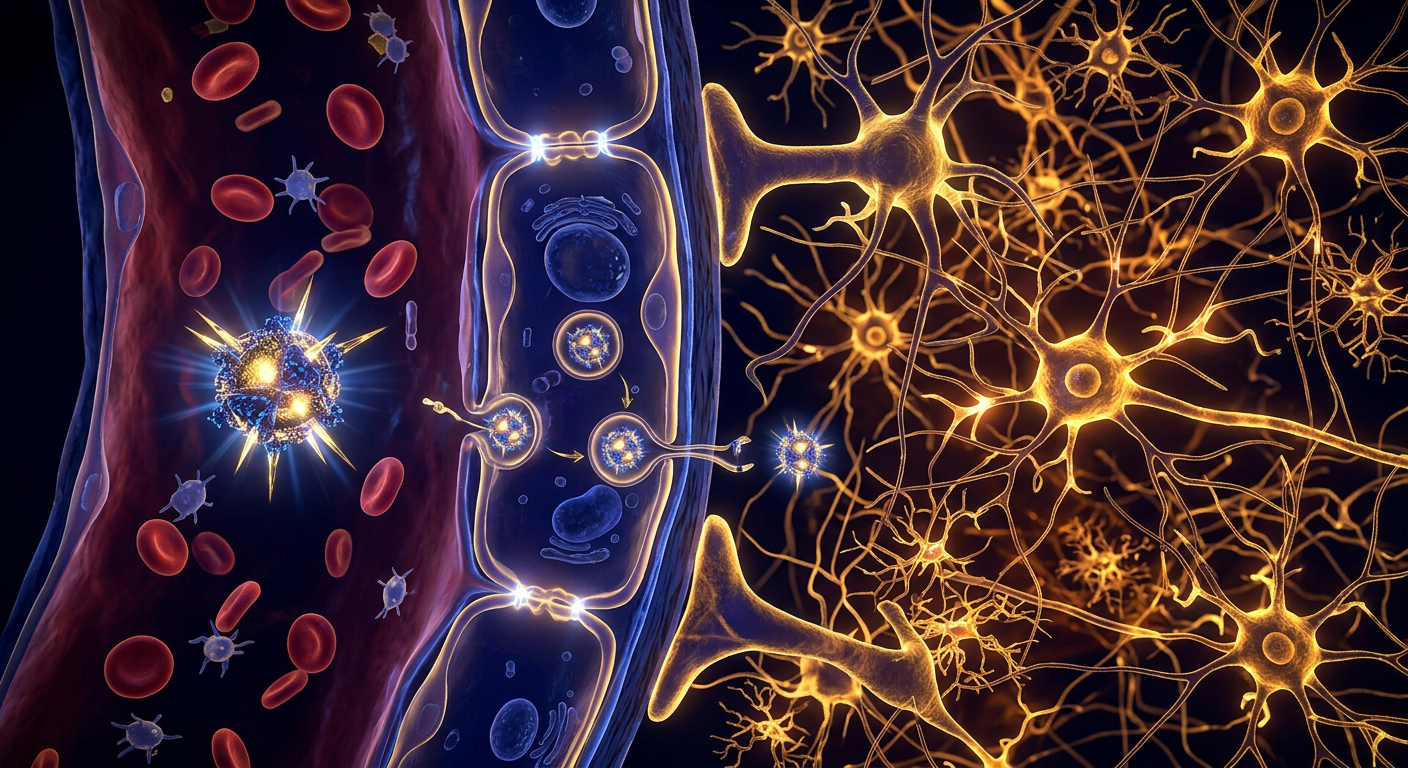
The blood-brain barrier remains the most formidable biological gatekeeper in human medicine, blocking more than 98% of small molecules and virtually all large-molecule biologics from reaching central nervous system tissue from the bloodstream. For genetic medicines such as antisense oligonucleotides (ASOs) and therapeutic antibodies, delivering treatment to deep subcortical structures historically required direct, recurring intrathecal lumbar punctures. While spinal injections deliver high local drug concentrations in the lumbar cistern, drug distribution to deep brain structures like the striatum and basal ganglia remains minimal.
Biopharmaceutical protein engineers are overcoming that anatomical barrier by hijacking physiological receptor-mediated transcytosis systems. By conjugating therapeutic ASOs and enzyme payloads to engineered monovalent antibody fragments targeting transferrin receptor 1 (TfR1), molecular shuttles bind receptors on capillary endothelial cells, undergo endocytosis, and cross into brain parenchyma intact.
Preclinical data published in neurological journals demonstrated a greater than fifty-fold increase in brain tissue exposure compared to standard unconjugated oligonucleotides. In animal models of Huntington's disease and frontotemporal dementia, intravenous administration of TfR1-conjugated ASOs drove widespread, dose-dependent knockdown of mutant huntingtin and tau transcripts across the cortex, hippocampus, and striatum.
The Affinity Calibration Dilemma
The core bioengineering challenge in transferrin receptor shuttle design is balancing receptor binding affinity. First-generation delivery vehicles utilized high-affinity bivalent antibodies that bound TfR1 with nanomolar avidity. While these molecules adhered tightly to endothelial surfaces in blood vessels, they failed to dissociate on the abluminal brain side, remaining trapped inside lysosomal degradation pathways within endothelial cells.
Modern transport vehicles rely on low-to-moderate monovalent affinity engineered with pH-dependent binding kinetics. The shuttle binds TfR1 at neutral physiological blood pH (7.4), undergoes transcytosis across the vascular wall, and rapidly releases its genetic cargo upon encountering the slightly lower pH (7.0 to 7.2) of the brain interstitial space. This release mechanism frees the therapeutic oligonucleotide to diffuse broadly through extracellular matrix to neuronal and glial targets.
However, safety concerns around hematologic toxicity remain under scrutiny. Because transferrin receptors are densely expressed on circulating reticulocytes and erythroid precursors, non-specific binding can trigger complement activation, acute anemia, or receptor downregulation. Developers are calibrating dosing regimens and exploring alternative target receptors, including CD98hc and insulin-like growth factor 1 receptor (IGF1R), to avoid red blood cell clearance.
Expanding Beyond Rare Neurogenetics
Transitioning from invasive lumbar punctures to outpatient intravenous infusions represents a profound transformation in clinical management. For pediatric patients with spinal muscular atrophy or adults with rapidly progressive amyotrophic lateral sclerosis, eliminating routine spinal taps drastically reduces procedural risks, post-dural headaches, and hospital resource utilization.
Large-cap pharmaceutical primes are partnering aggressively with transport-shuttle biotechs, evaluating whether brain penetrant platforms can rescue antibody programs in Alzheimer's and Parkinson's disease. By elevating central bioavailability without requiring heroic systemic dosing, molecular shuttles are converting previously inaccessible neurodegenerative targets into viable commercial pipelines.