
Why Is Lilly Paying Nearly $3 Billion for a Phase 1 Graves' Drug?
Lilly is buying Merida for up to $2.875 billion, betting a Phase 1 autoantibody degrader can treat Graves' without broad immune suppression.
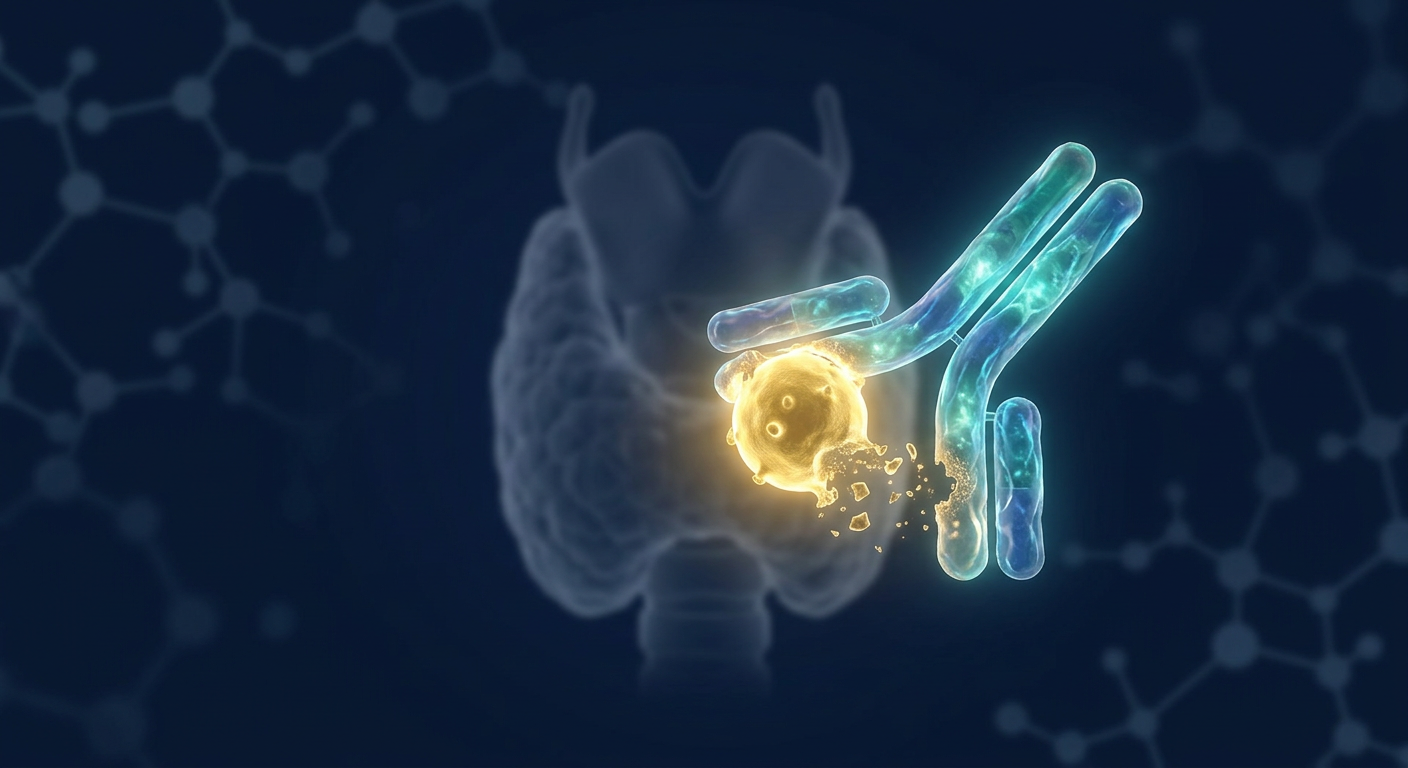
Eli Lilly is paying up to $2.875 billion in cash for a private company whose lead asset is still in Phase 1. On Aug. 31, 2026, the drugmaker announced a definitive agreement to acquire Merida Biosciences, which is developing biologics engineered to selectively degrade pathogenic autoantibodies. Lilly did not disclose how that total splits between an upfront payment and contingent milestones. The deal is expected to close in the fourth quarter of 2026, subject to customary closing conditions and regulatory approvals.
The check is large for initial clinical data. What Lilly is buying is a platform thesis: delete the disease-causing antibodies behind Graves' disease and thyroid eye disease (TED), and leave the rest of the immune system intact. Whether that thesis is worth nearly $3 billion depends on biology that has only begun to show itself, and on a TED market that already has two approved drugs.
Phase 1 data, and a pipeline Lilly is clearly paying for
Merida's lead program, MER511, is in Phase 1 for Graves' disease and TED. The company exited stealth last year with $121 million in funding. The Phase 1 trial began in December, with participants receiving intravenous or subcutaneous doses.
Initial Phase 1 data show MER511 achieved robust reductions in pathogenic thyroid-stimulating antibodies with a favorable initial safety profile, according to Lilly's release. That is encouraging target engagement, and it is also early. Phase 1 can show that a pathogenic antibody falls and that patients tolerate the drug. It does not yet show whether Graves' hyperthyroidism recedes, whether TED signs reverse, or whether those effects last after dosing stops.
The medical need is real. Graves' disease affects approximately 3 million people in the United States and carries elevated cardiovascular risk and mortality. Roughly 25 to 40 percent of people with Graves' go on to develop TED, which can cause pain, disfigurement, and, in severe cases, vision loss. No approved treatments directly target the autoantibodies that cause these conditions.
Behind the lead sits the optionality that helps explain the price. MER769 is a preclinical program for food allergy, asthma, chronic spontaneous urticaria, and other diseases driven by IgE, the antibody responsible for allergic reactions. Earlier-stage programs address kidney diseases such as membranous nephropathy. Francisco Ramírez-Valle, M.D., Ph.D., Lilly's senior vice president of immunology research and early clinical development, said the company is building its pipeline around therapies that change the course of disease, and that Merida's lead program is designed to selectively and directly eliminate the autoantibodies causing Graves' and TED while preserving normal immune function. Merida's chief executive is Adam Townsend. Its chief scientific officer and founder is Dario Gutierrez.
Two approved TED drugs, and a crowded Graves' field
The commercial bar in TED is already high. Amgen's Tepezza and Viridian Therapeutics' Lumvoa are the two FDA-approved medicines for the condition, as CNBC reported. Those products treat TED. They do not, on Lilly's account, directly delete the thyroid-stimulating antibodies that drive Graves' disease itself.
Investigational approaches in Graves' disease include FcRn blockers from argenx and Immunovant, which lower IgG by blocking the neonatal Fc receptor that recycles antibodies; Sanofi's BTK inhibitor rilzabrutinib; Biohaven's IgG degrader BHV-1300; and Lycia Therapeutics' LCA-0321, designed to bind and eliminate TSHR autoantibodies. Fierce Biotech outlined that slate.
Merida's claim is narrower than FcRn blockade or pan-IgG degradation: remove the disease-causing antibody and its source B cells while leaving humoral immunity otherwise intact. If Phase 1 reductions in thyroid-stimulating antibodies translate into durable disease control, that selectivity could matter for chronic dosing and infection risk. If they do not, Lilly will have spent heavily on a mechanism that looks elegant on a slide and ordinary in the clinic.
The $2.875 billion headline also includes contingent milestones whose size Lilly did not split out. A large earnout would limit cash at risk if MER511 stalls. An undisclosed mix leaves investors guessing how much of the biology risk Lilly actually transferred.
GLP-1 cash, and an immunology hedge
The purchase fits a 2026 buying spree propelled by GLP-1 drug sales. Lilly this year agreed to acquire psychedelics company AtaiBeckley for up to $3.8 billion including milestones, announced in July, and cancer cell-therapy firm Kelonia for up to $7 billion, announced in April. Analysts view the Merida deal as a way to diversify Lilly's immunology and inflammation pipeline beyond obesity and diabetes.
Paying up to $2.875 billion for Phase 1 Graves' data plus an IgE and kidney option set only holds if Lilly believes the platform can generate more than one product. AtaiBeckley and Kelonia were also structured as "up to" totals. Merida is smaller than those two on paper, and earlier.
What the deal's success hinges on is concrete. MER511 has to convert antibody knockdown into clinical benefit in Graves' and TED, against approved TED medicines and a dense investigational Graves' field. The IgE and nephropathy programs have to look real enough that the platform, not just the lead, was worth the check. Until later-stage data arrive, the $2.875 billion question is whether selective autoantibody deletion becomes an immunology franchise or remains an expensive Phase 1 option.