Why Is Lilly Paying Nearly $3 Billion for a Phase 1 Graves' Drug?
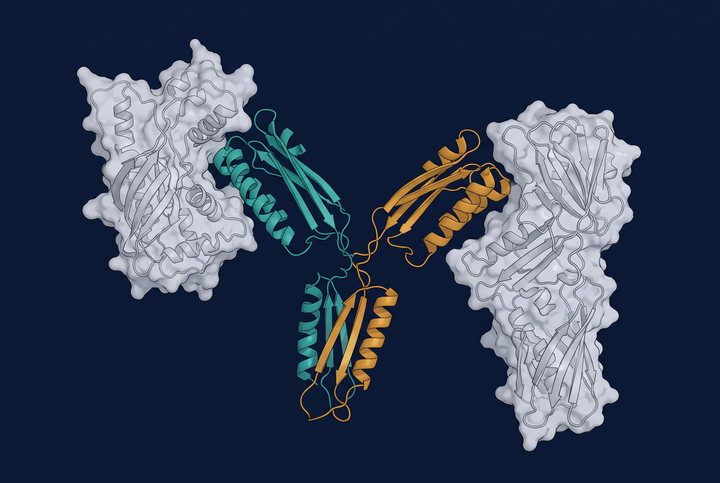
Lilly is buying Merida for up to $2.875 billion, betting a Phase 1 autoantibody degrader can treat Graves' without broad immune suppression.
Newsletter
The week in pipeline, markets, policy, and science — in your inbox.
After encouraging early pancreatic data, demand for Alpha DaRT helped quadruple its IMPACT study from 12 patients to 48 as the company moves toward a pivotal trial.
The FDA's landmark approval of Revolution Medicines' daraxonrasib (Rasonque) introduces the first multi-selective RAS(ON) tri-complex inhibitor for metastatic pancreatic adenocarcinoma, doubling overall survival over standard chemotherapy.
MariTide delivered up to about 20% mean weight loss at 52 weeks without a plateau, then Amgen lost about $7 billion in market value. The remaining fight is GIP direction, first-dose gut burden, and conjugate manufacturing cost.
Suzetrigine beat placebo on SPID48 in both pivotal acute-pain trials, then failed the superiority test against hydrocodone/acetaminophen, including a statistically significant loss in bunionectomy.
The $2.3 billion licensing deal for Phase 1 asset HM17321 targets a core drawback of current GLP-1 therapies: the loss of lean skeletal muscle alongside fat.
Conjugating antisense oligonucleotides to transferrin receptor transport vehicles achieves fifty-fold deeper brain penetration, challenging the standard of invasive spinal punctures.