
The First Keytruda Biosimilar Filing Reaches FDA Without a Phase 3 Trial. Can Analytics Carry a $31.7 Billion Molecule?
The FDA has accepted the first publicly announced biosimilar filing for Keytruda, built with no comparative Phase 3 trial. The pathway shortcut, not the molecule, is what reshapes the $31.7 billion franchise.
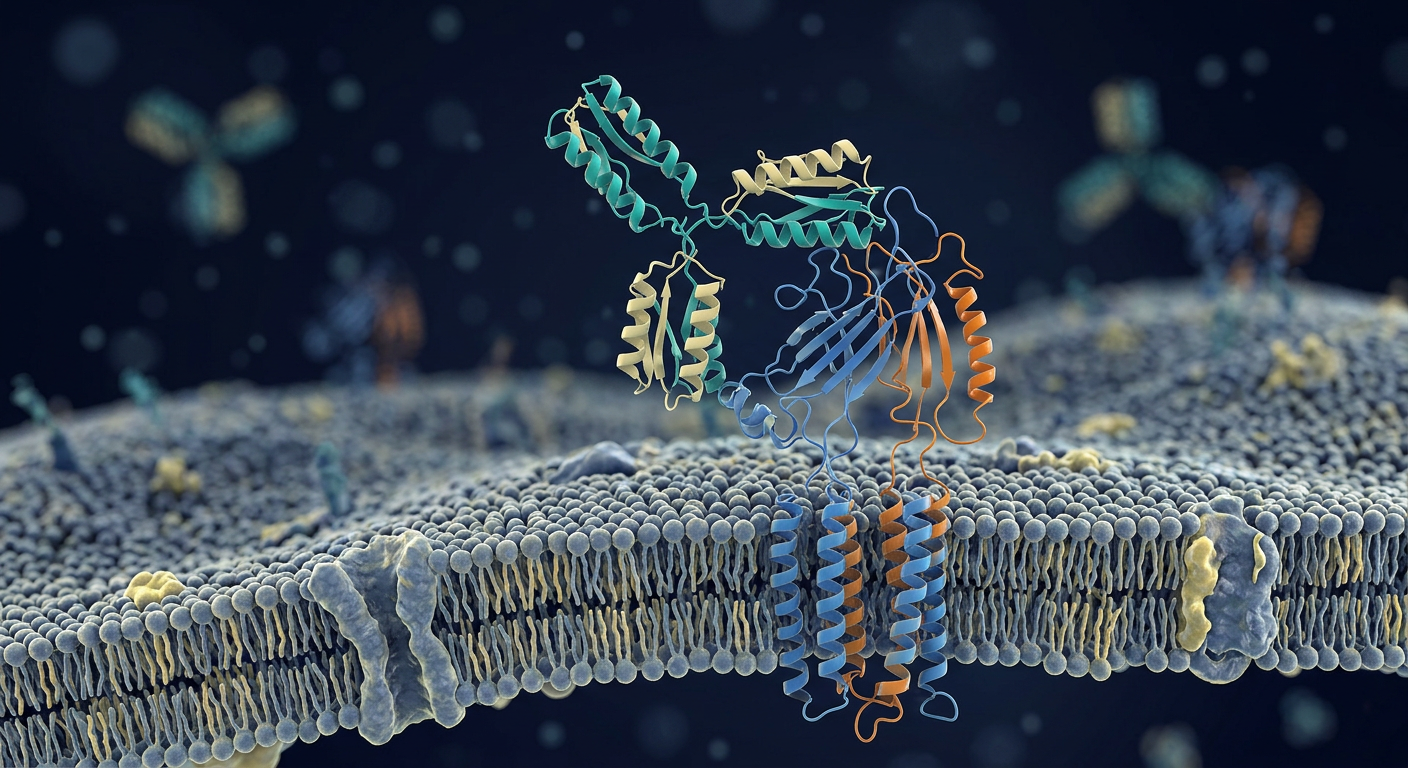
On October 13, 2026, Formycon AG (FSE: FYB) and Zydus Lifesciences announced that the FDA has accepted for review the Biologics License Application for FYB206, a proposed biosimilar to Keytruda (pembrolizumab) and, to the companies' knowledge, the first publicly announced filing of its kind. The more consequential fact sits underneath it: the program reached the agency with no comparative Phase 3 efficacy trial at all.
The trial that never happened
In February 2025, Formycon agreed with the FDA that FYB206 does not require a comparative Phase 3 efficacy study. For monoclonal antibody biosimilars, such trials had long been the standard burden, typically running one to three years with hundreds of patients. Instead, FYB206 was built on a comprehensive analytical and functional comparability package plus the pivotal Dahlia pharmacokinetic study, which met its primary objective in February 2026 by demonstrating pharmacokinetic equivalence with the reference product. Clinical development completed in July 2026, and the BLA went in during Q3 of that year.
Skipping the efficacy trial is, by the companies' own account, a key reason FYB206 reached FDA review this quickly, and it is expected to save investments in the high double-digit million euro range. Under BsUFA, the agency aims to complete its review within 12 months of submission, up to 60 days of filing review followed by 10 months of substantive review, which puts a decision plausibly in Q3 2027. The dossier has also gone to Health Canada.
In its draft guidance, published in the Federal Register on November 20, 2025, the FDA itself proposed that comparative efficacy trials will generally no longer be required for therapeutic proteins. FYB206 is therefore an early application of the agency's own stated position, arriving at the regulator's doorstep before the guidance has even been finalized.
What is at stake in the franchise
Pembrolizumab is an immune checkpoint inhibitor that binds to and blocks the PD-1 receptor, deployed across numerous cancer types. According to Merck's fourth-quarter and full-year 2025 results, worldwide sales of Keytruda including the subcutaneous formulation Keytruda Qlex reached USD 31.7 billion in 2025, up 7%, and Keytruda remains the world's best-selling biologic medicine. In the first half of 2026, combined sales of Keytruda and Keytruda Qlex totaled USD 16.4 billion, per the companies' announcement, which cites Merck's Q2 2026 results.
The timing math is what gives this filing its weight. A Q3 2027 decision would make Formycon and Zydus the first publicly named contenders in a franchise where no other filing has surfaced. For a drug generating more than $31 billion a year, even a modest biosimilar share translates into revenue shifts large enough to reframe Merck's post-loss economics. The trade-off the FDA has implicitly accepted is that analytical equivalence, verified through structural and functional characterization plus pharmacokinetics, now substitutes for the demonstration of equivalent clinical outcomes that defined biosimilar development for a generation.
The speed-versus-evidence question
There is a genuine tension in this pathway. Comparative efficacy trials were never really about the molecule. They were a catch-all insurance policy: if the analytical package missed something, a head-to-head clinical endpoint would catch it. Retiring that safety net rests on the argument that modern analytical methods are sensitive enough to detect differences that matter. For a small, well-characterized protein, that argument is easier to make. For a monoclonal antibody with a complex glycosylation profile, the residual risk is harder to dismiss, and the FDA's decision on FYB206 will adjudicate how much residual doubt the agency is willing to carry in exchange for a cheaper, faster pathway.
The commercial mechanics have been set up accordingly. In December 2025, Formycon and Zydus signed an exclusive licensing and supply agreement for FYB206 in the US and Canada: Formycon finalizes development, files the dossiers, and supplies product, while Zydus commercializes. The structure included mid-teens-million-euro upfront and 2025 milestone payments, further development and regulatory milestones expected in the mid-double-digit-million-euro range in total, and a mid-double-digit share of gross profits to Formycon upon launch; the FDA acceptance triggers a milestone payment. Zydus commercialization remains subject to regulatory approval and resolution of any intellectual property issues. Beyond North America, Formycon has partnered the asset with MS Pharma for the MENA region and Lotus for parts of Asia-Pacific.
The wider gap the filing exposes
Formycon's release points to a figure that frames the whole moment: per the IQVIA Institute, 118 biologic medicines with combined sales of USD 232 billion will lose exclusivity in the US alone by 2034, and biosimilars are in development for only twelve of them. That gap is the quieter story here. If an analytical-only pathway removes a high double-digit million euro hurdle and a one-to-three-year timeline, the race is no longer reserved for companies that can fund a Phase 3 per asset.
The FDA's review of FYB206 will be watched less as a decision about one product and more as a verdict on the pathway itself. If the agency clears it on schedule in 2027, the default has effectively moved, and every major biologic cliff that follows will be contested by more entrants, arriving sooner, having proved everything in the lab instead of in patients.