
Scholar Rock Cracks Latent Myostatin to Deliver SMA's First Muscle Drug
FDA approval of Isembyld gives spinal muscular atrophy its first muscle-targeted therapy, moving motor function in patients plateaued on Spinraza or Evrysdi while introducing a 9% fracture warning and a double-biologic payer burden.
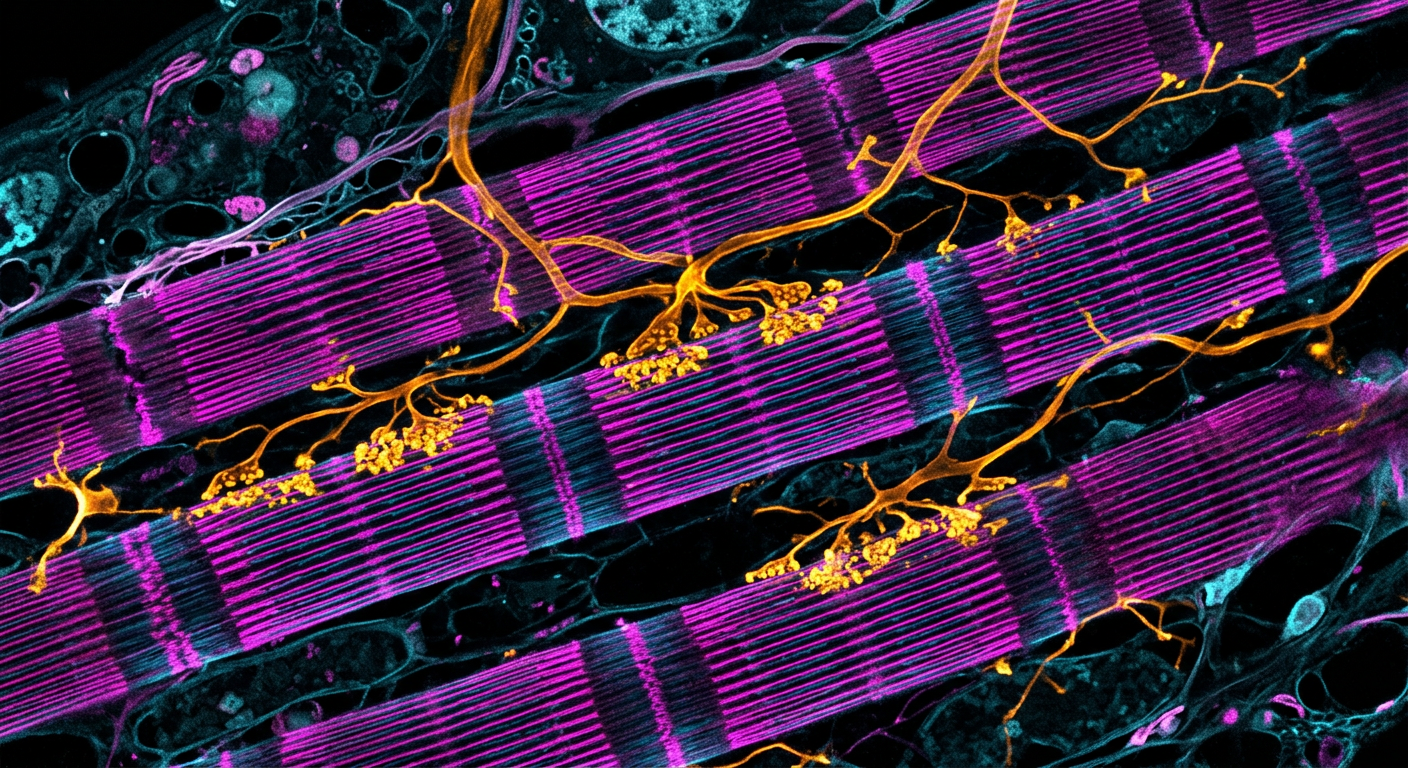
On September 11, 2026, the US Food and Drug Administration approved Isembyld (apitegromab-mstn) injection as the first muscle-targeted therapy for spinal muscular atrophy. Scholar Rock's fully human monoclonal antibody does not replace SMN protein and does not stop motor neuron death. It is indicated for adults and pediatric patients 2 years of age and older who are already on an approved SMN2-targeted treatment, including Biogen's Spinraza (nusinersen) or Roche's Evrysdi (risdiplam). The label treats a gap that gene therapy and SMN upregulators never closed: once SMA is established, muscle keeps wasting even when neurons are pharmacologically supported.
SMA affects roughly 1 in 10,000 live births and is caused by mutations or deletions in SMN1. SMN2 splicing drugs and Novartis's Zolgensma gene replacement have transformed survival. Patients with non-ambulatory Type 2 and Type 3 disease still plateau on motor scales. That plateau is the clinical opening Scholar Rock spent years trying to occupy.
The Biological Riddle of Myostatin
Myostatin is a TGF-beta superfamily ligand that negatively regulates skeletal muscle mass. Blocking it has looked obvious since the 1990s. Prior programs show why that path failed. Pfizer's domagrozumab, which bound mature myostatin, missed in Duchenne muscular dystrophy. Novartis's bimagrumab blocked activin type II receptors and produced bleeding, telangiectasias, and other off-target toxicities because ActRII also transduces GDF-11 and activin.
Apitegromab takes a narrower cut. It is a fully human IgG4 antibody that selectively binds promyostatin and latent myostatin, the inactive precursor forms that sit in skeletal muscle. Those precursors are activated extracellularly by tolloid-like metalloproteinases (BMP-1, TLL-1, and TLL-2). By occupying the precursor, apitegromab prevents that activation step. It does not bind mature circulating myostatin, the ligand most earlier antibodies chased, and therefore avoids promiscuous engagement of related TGF-beta ligands. A 2020 Journal of Biological Chemistry paper described that selectivity as the difference between a muscle-restricted blockade and a systemic TGF-beta experiment.
Reversing Motor Decline in the Clinic
The Phase 3 SAPPHIRE trial (NCT05156320) randomized 188 patients across nine countries in a double-blind, placebo-controlled design. Everyone stayed on background SMN2-targeted therapy. The primary endpoint was change in the Hammersmith Functional Motor Scale-Expanded (HFMSE) at 52 weeks in patients aged 2 to 12 years, the main efficacy population of 103.
Apitegromab 10 mg/kg produced a 2.2-point HFMSE improvement over placebo, with a nominal p-value of 0.0121. Placebo patients on SMN therapy continued to lose motor function. A clinically meaningful response, defined as a gain of 3 or more HFMSE points, occurred in 34.2% of the 10 mg/kg arm versus 13.5% on placebo (odds ratio 3.8, nominal p = 0.0125). Those figures, later published in the medical literature, are modest in absolute terms and large relative to a background of decline. A 2.2-point separation against that downhill slope is the first randomized evidence that residual muscle can still be recruited.
The Skeletal Strain of Muscle Regrowth
The FDA prescribing information carries a warning for bone fractures. Fractures occurred in 9% of patients on the 10 mg/kg dose versus 2% on placebo. The mechanistic explanation is straightforward. Chronic non-ambulatory SMA leaves bones osteopenic and demineralized. Rapidly increasing muscle contractile force then loads those bones with mechanical strain they are not ready to carry.
The most common adverse events were otherwise familiar: upper respiratory infections, vomiting, cough, headache, gastroenteritis, and pharyngitis. Fracture risk will shape how neuromuscular clinics roll the drug out. Physical therapy, bone density monitoring, and cautious titration of activity are likely to sit beside the infusion schedule. Muscle gain that outruns skeletal adaptation is a new management problem for a field that until September 11 had no muscle-directed option.
Commercial Reality and the Double-Biologic Burden
Scholar Rock announced that commercial launch is underway and that product would ship within days. The company received a Rare Pediatric Disease Priority Review Voucher and stood up Scholar Rock Supports as a patient access program.
The hard part is stacking. Spinraza costs about $750,000 in year one and about $375,000 annually thereafter. Evrysdi can run as high as $340,000 a year. Isembyld is indicated only on top of an approved SMN2-targeted treatment, so payers inherit a double-stacked biologic regimen in a rare disease that already strains specialty budgets. Prior authorization that demands documented HFMSE gains is the obvious control. A 2.2-point mean benefit and a 34.2% responder rate give medical directors a number to police. Non-responders will be difficult to keep on therapy. Responders will still need both drugs.
That payer tension does not erase the biology. After decades of failed myostatin programs, a precursor-selective antibody has moved HFMSE in children who were already on the best SMN medicines available. The remaining question is whether clinics can grow muscle without breaking the skeleton, and whether insurers will pay for both layers long enough to find out.