Lilly's Retatrutide More Than Doubled Ozempic's Weight Loss
In the first Phase 3 head-to-head against another incretin, Lilly's retatrutide more than doubled Ozempic's weight loss in type 2 diabetes, at the cost of roughly triple the discontinuation rate on the top dose.
Eli Lilly announced on Oct 28, 2026 that retatrutide more than doubled Ozempic's weight loss in adults with type 2 diabetes, and beat it on A1C as well. In TRANSCEND-T2D-2, a Phase 3 head-to-head study of 1,298 adults whose diabetes was inadequately controlled on metformin, with or without an SGLT2 inhibitor, once-weekly retatrutide 12 mg cut mean body weight by 20.9% at 80 weeks. Once-weekly semaglutide 2 mg cut it by 9.4%.
That is 21.5 kg, or 47.4 lb, from a mean baseline of 102.4 kg (225.8 lb) and a BMI of 36.8. The 9 mg dose was close behind at 19.5% (20.1 kg, or 44.3 lb). Semaglutide lost 9.5 kg, or 20.9 lb. Both retatrutide doses beat semaglutide on weight with p<0.001 for superiority. A1C fell an average 2.2% on either retatrutide dose versus 1.8% on semaglutide, from a mean baseline of 8.3%.
The result is the first Phase 3 comparison of retatrutide with another incretin medicine. It is also an open-label trial, the extra efficacy came with more dropouts, and beating semaglutide 2 mg is a lower bar than beating Lilly's own tirzepatide.
A1C first, then the unblinded design
Adults with baseline A1C of 7.0% to 10.5% were randomized 2:2:1 to retatrutide 9 mg, retatrutide 12 mg, or semaglutide 2 mg. Treatment is subcutaneous and once weekly. The primary objective was to show retatrutide 12 mg noninferior to semaglutide 2 mg on A1C reduction at 80 weeks. Retatrutide met that endpoint and all key secondary endpoints. This is the sixth Phase 3 trial in which the drug delivered strong efficacy.
Patients knew which drug they were on. That is a standard reason to treat the size of the advantage carefully until independent confirmation arrives. The efficacy estimand assumes participants remained on treatment for 80 weeks without starting additional glucose-lowering medication. Lilly said retatrutide also improved certain cardiovascular risk factors more than semaglutide, including non-HDL cholesterol, triglycerides, and systolic blood pressure, but did not report the size of those differences.
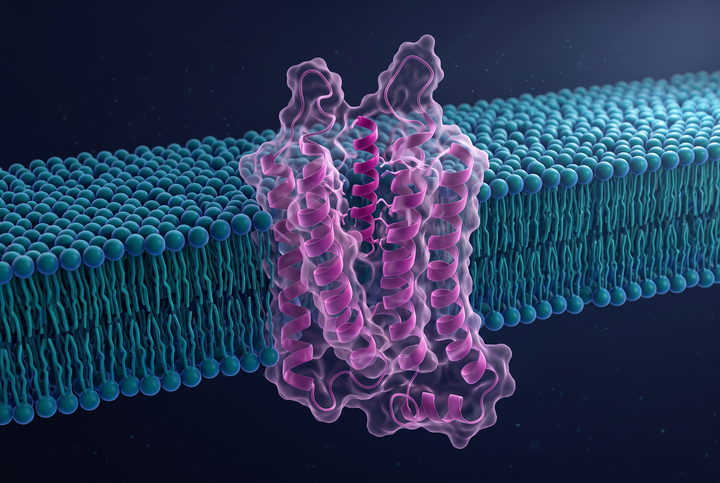
Retatrutide is an investigational, once-weekly triple hormone receptor agonist: a single molecule that activates receptors for GIP, GLP-1, and glucagon. It is not approved anywhere. Detailed TRANSCEND-T2D-2 results will be presented at a future medical meeting and published in a peer-reviewed journal. Lilly did not disclose a regulatory filing timeline.
The tolerability bill on 12 mg
Most adverse events were mild to moderate and typically resolved. Diarrhea occurred in 28.3% on retatrutide 9 mg and 32.7% on 12 mg, versus 26.4% on semaglutide. Nausea was 21.2% and 23.8% versus 21.3%. Vomiting was 10.2% and 15.0% versus 13.2%. Constipation ran the other way, at 14.2% and 13.1% versus 19.8% on semaglutide. Dyspepsia was 10.4% and 8.5% versus 11.6%. Dysesthesia appeared in 4.8% and 6.5% on retatrutide versus 2.7% on semaglutide.
Treatment discontinuation due to adverse events was 4.8% on 9 mg and 7.9% on 12 mg, versus 2.7% on semaglutide. On the higher dose, that is roughly triple the semaglutide rate, with more diarrhea, nausea, and vomiting. For a chronic weekly injection, 7.9% stopping for side effects is the figure that belongs next to 20.9% weight loss.
Ozempic was not the franchise test
Retatrutide's real job is to succeed Lilly's own tirzepatide, sold as Mounjaro. Lilly also makes Foundayo (orforglipron). Beating semaglutide is useful, but it does not by itself justify a premium over Mounjaro. That is why Lilly is running TRIUMPH-5, an ongoing Phase 3 head-to-head of retatrutide versus tirzepatide in adults with obesity with or without type 2 diabetes.
Weight loss is also harder in people with diabetes. In TRIUMPH-2 (type 2 diabetes and obesity), the highest retatrutide dose lost an average 49.6 lb, or 20.8%, close to the 20.9% in TRANSCEND-T2D-2. In TRIUMPH-1 (adults with obesity or overweight without diabetes), the 12 mg dose produced a mean weight loss of 28.3% at 80 weeks. Same molecule, same 12 mg dose, and a much larger effect when diabetes is not in the way.
Lilly is studying retatrutide in Phase 3 for obesity or overweight with a weight-related condition, type 2 diabetes, knee osteoarthritis pain, moderate-to-severe obstructive sleep apnea, chronic low back pain, cardiovascular outcomes, and metabolic dysfunction-associated steatotic liver disease. TRANSCEND-T2D-2 answers the Ozempic comparison in diabetes. Whether the triple agonist is a successor to tirzepatide still depends on other readouts.